


For many people, a dental cleaning is something they schedule out of routine - but don’t fully understand. You sit in the chair, tools are used, your teeth feel smoother afterward, and you’re told everything looks good. But what actually happens during that appointment? And why is it such an important part of maintaining your oral health?
A professional dental cleaning is much more than a quick polish. It’s a carefully structured process designed to remove buildup, protect your teeth and gums, and give your dentist valuable insight into your overall oral condition. Knowing what to expect can make your visit feel more comfortable and help you see the real value behind each step.
Even with consistent brushing and flossing, certain areas of your mouth are difficult to clean thoroughly. Over time, plaque - a sticky film of bacteria - can harden into tartar, which cannot be removed with a toothbrush alone.
Dental cleanings target these areas, helping to:
Regular cleanings are one of the simplest ways to support long-term oral health while avoiding more complex dental treatments later.
Your dental cleaning usually begins with a brief but important examination. Before any cleaning starts, the dental hygienist or dentist takes a close look at your teeth and gums.
This step helps identify:
If anything unusual is detected, the dentist may take a closer look before proceeding. This ensures your cleaning is both safe and tailored to your current needs.
The next step is known as scaling, which focuses on removing plaque and hardened tartar from the surfaces of your teeth and along the gumline.
Using specialized instruments, the hygienist carefully cleans areas that are difficult to reach with regular brushing. You may hear a light scraping sound during this process, which is completely normal.
While some areas may feel slightly sensitive - especially if there is significant buildup - the process is designed to be gentle and controlled.
Once the larger deposits are removed, attention shifts to the spaces between your teeth. These areas are often where plaque accumulates unnoticed.
The hygienist uses fine tools or floss to clean between teeth thoroughly, removing debris and polishing tight spaces. This step helps ensure that your entire mouth - not just visible surfaces - is properly cleaned.
For patients who don’t floss regularly, this part of the cleaning can highlight areas that may need extra attention at home.
After scaling, your teeth are polished using a specialized dental paste and a rotating tool. This step gives your teeth a smooth, clean surface that feels noticeably different.
Polishing serves more than a cosmetic purpose. It helps:
The paste used often has a slightly gritty texture, but it is safe and effective for achieving a polished finish.
Even if you floss regularly at home, professional flossing is an important part of the cleaning process. It allows the hygienist to:
This step also provides helpful insight into your gum health, as bleeding may indicate early signs of inflammation.
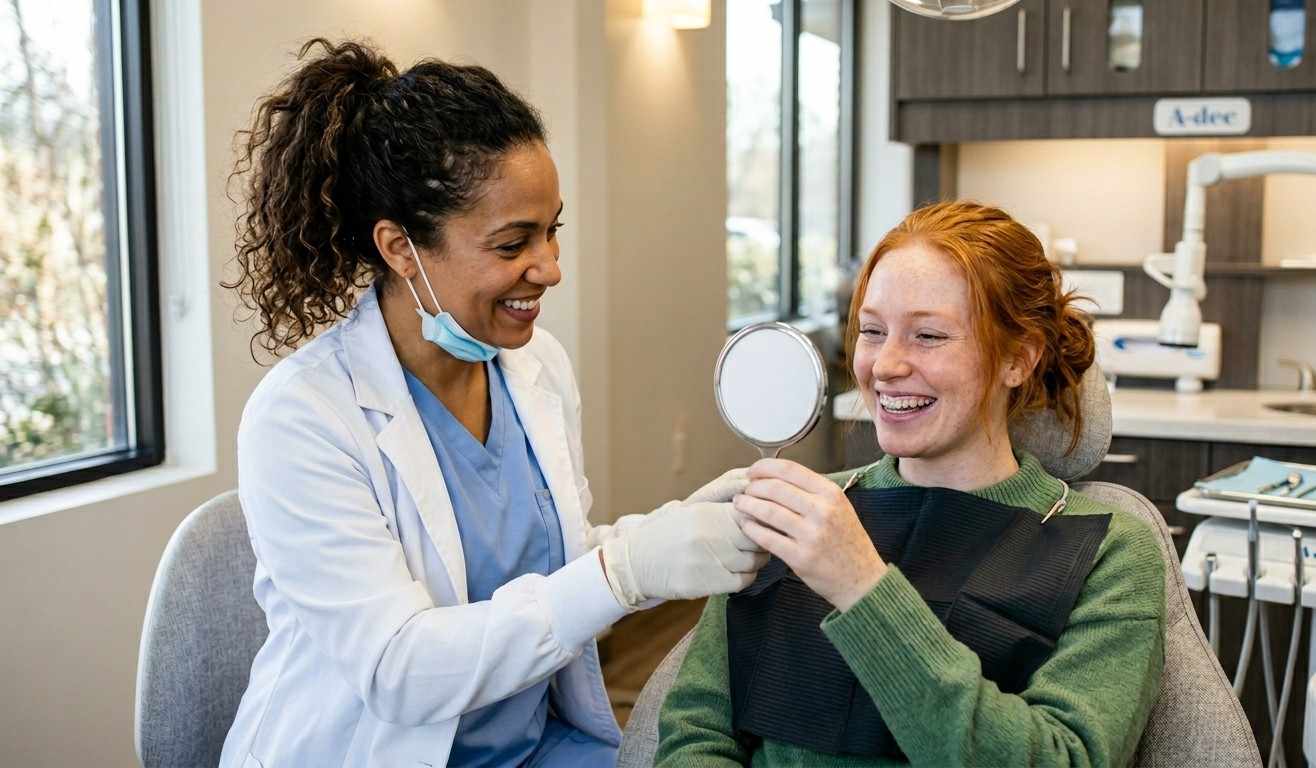
In some cases, a fluoride treatment is applied at the end of the cleaning. Fluoride helps strengthen enamel and protect against future decay.
This step is especially beneficial for:
The fluoride is typically applied as a gel, foam, or varnish and takes only a few minutes to complete.
Before your visit ends, your dentist reviews your oral health and discusses any findings. This is your opportunity to ask questions and receive personalized recommendations.
You May Receive Guidance On:
This final step ensures you leave with a clear understanding of your oral health and how to maintain it between appointments.
For most patients, dental cleaning is comfortable and straightforward. You may feel light pressure or mild sensitivity during certain steps, especially if there is more buildup than usual. However, the process is generally well-tolerated and leaves your mouth feeling noticeably fresher.
Patients often describe the result as a “clean slate” - a smooth, polished feeling that is difficult to achieve with home care alone.
If you’re due for a cleaning or want to maintain a consistent oral care routine, Dental Associates in Bayonne, NJ provides thorough, patient-focused dental cleanings. The practice is located at 472 Broadway, Bayonne, NJ 07002.
In addition to Bayonne, patients from nearby areas including Elizabeth, NJ (07201, 07202, 07206) and Jersey City, NJ (07307) visit Dental Associates for preventive care. Many individuals choose this practice when searching for a top-rated dentist near me or the best dentist near me for routine dental cleanings and long-term oral health support.
Most people benefit from a dental cleaning every six months. However, some patients may need more frequent visits depending on their oral health, gum condition, or risk of plaque buildup.
Your dentist will recommend a schedule that fits your needs, ensuring you maintain a healthy balance between professional care and daily hygiene.
Dental cleanings may seem routine, but their impact is long-lasting. By removing buildup, monitoring oral health, and reinforcing good habits, these dental visits help keep your teeth and gums in excellent condition.
Understanding each step of the process can make your next appointment feel more comfortable and meaningful. Instead of seeing it as just another visit, it becomes an essential part of protecting your smile for the future.